
12/17/2025
Testing and Refining
Dust Hightail Beta testing updates!
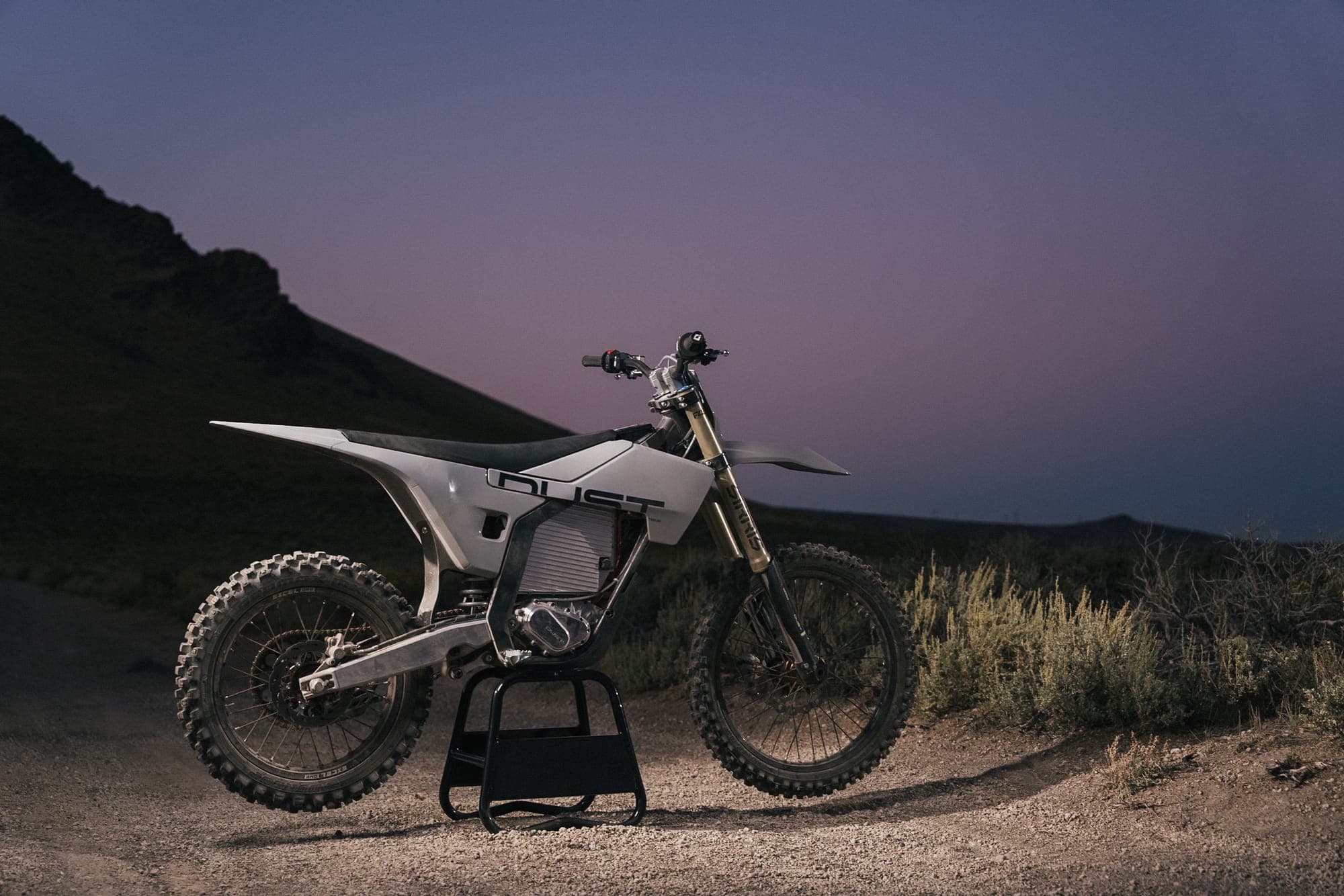
We’ve been spending a lot of time on the trail lately, putting more miles on the latest Hightail Beta bikes and comparing what we feel outside with what we measure inside. This update covers what we’ve been focusing on, what we’re seeing, and what we’re adjusting as a result.
1. How the Hightail Feels on Real Trails
While the track days have been great and provide precise feedback, we rely heavily on natural terrain to understand how the bike behaves in less controlled scenarios — the unexpected bumps, awkward corners, loose dirt, and everything in between.
From the last month of testing, a few things stood out:
- Front-end feel: The bike continues to steer the way we want — consistent, predictable, and without surprises as the terrain changes.
- Balance: The bike stays neutral when the ground tilts or gets off-camber. You don’t have to fight it to stay on line.
- Suspension: On small, repeated bumps (like trail chatter), the rear shock feels a little bit stiffer for the chunky trail and enduro terrain, due to its "generalist" tune. We’ve already been working on this with Sirris, with the likely fix being some guidance for clicker settings based on terrain. This testing has helped confirm we’re on the right track with dialing in suspension and spring weights for riders.
This kind of natural-terrain feedback helps us fine-tune what riders actually feel, not just what numbers say. It is part of the moto culture to tinker and make the bike yours, our goal is to provide the Hightail at the optimum baseline out of the box for you to then build on and tune if desired.
2. Power Delivery
We’ve been refining how the Hightail delivers power — across the board from flat out on the track to lower speeds in technical terrain. Dyno testing has been giving us great data, but trail testing tells us how it actually feels on a climb, in a tight turn, or over rocks.
Here’s what we noticed:
- Smooth start: The bike engages cleanly when you first roll on the throttle — no jerks or sudden jumps. We have some fine tuning to do on the optimization of the initial power delivery curve but we are on the right track to have the preset modes dialed in for different riding disciplines!
- Strong mid-range: On climbs and quick bursts, the Hightail produces the steady pull we’re targeting. We are working to ensure that whether you are at a higher cruising speed or working to get over a log, the appropriate mode and power is available to you.
- Rider modes: While we first planned to launch with 3 modes, we have learned that in order to provide optimal riding for a wide range of riders we are expanding it to 5 modes (we will do a deep dive on that in a dedicated newsletter!).
The confidence is at an all time high with the drive train, so being able to be deep diving into fine tuning is super exciting for us. We also got the Hightail on the dyno and were showing 44hp at the wheel in mode 3, so we are stoked on the performance the Dust designed MGU is providing!
3. Battery and Heat
Another aspect of trail testing is watching how the battery and electronics behave when the bike is ridden freely — not on a loop or under fixed conditions. We track temps and have GPS tracking on the bike to be able to match temp changes to exact riding moments.
From our most recent testing:
- Range behavior: The bike used energy at the rate we expected. Good to see consistency here. We have been able to get the battery all the way to 0% a few times and the power roll back is not too extreme, with it providing 6kW+ all the way down (you can still ride to the car vs. having to push).
- Battery temperatures: The battery didn’t heat up unexpectedly, even on long climbs.
- Electronic integrity: For the most part, everything stayed within our normal operating window. We have dealt with some controller overheating during hot days going flat out on the track, but it has not been an issue on full battery cycle trail rides. We are currently working on a full heat sink add-on that will leverage the airflow coming through dedicated vents in the fairings to get us into the operating window we need to be.
This has built our confidence with the longer battery-cycling days we have been undertaking. We have also been rapidly improving the cooling ability of our controller through designing cooling fins which provide additional surface area, similar to the fins that you see on the sides of the battery and MGU.
4. Watching How Riders Actually Ride
One of the most helpful parts of external testing is watching how a multitude of riders naturally interact with the Hightail. Everyone rides a little differently, and those differences help highlight what’s working and what needs refinement.
A few observations:
- Riders stayed in the “sweet spot” of the power band without trying.
- Riders of all levels have commented on the flick-ability and agility of the platform, whether on track or trail.
- Confidence is achieved quickly by most riders, even those who have never ridden an eMoto with dual hand brakes.
- Rider size is not an issue. We have had riders of all shapes and heights on the Hightail and none of them felt cramped or too extended. There will be some rider personal preferences such as bar sweep and height, along with spring weight to match your size, but the chassis is optimal for most every rider.
These small cues help us keep shaping the bike to feel intuitive — like something you understand within minutes, not days. It is also helping us narrow down what needs to be available to you, the riders, at purchase. Such as different springs/ general base suspension settings, rear wheel sizes, bar set ups, etc. Check out the video below for a rider day breakdown from Tucker at Electric Cycle Rider!
Ride day with Tucker from Electric Cycle Rider